Sonic Architecture
Let Conversation Carry
The most frequent guest complaint across fine dining and urban bistros is not menu seasoning or price: it is excessive noise. When patrons must lean across a table and shout to be heard, fatigue terminates the dining experience early.
The Lombard Effect in Crowded Rooms
The Lombard Effect describes the human reflex to speak louder when background noise rises. In a dining room wrapped exclusively in glass, ceramic tile, polished screed, and bare plaster, one loud party causes neighboring tables to elevate their voices. Within twenty minutes, the entire room escalates into a deafening 85 dB rumble.
Absorption Physics
Target Reverberation Time (RT60)
RT60 measures the seconds required for sound to decay by 60 decibels after stopping. Unconditioned industrial rooms often measure an RT60 of 1.4 to 1.8 seconds—akin to an empty gym hall.
For comfortable conversation where diners understand speech clearly without effort, the target RT60 in a working restaurant must sit between 0.6 and 0.8 seconds.
Material Innovation
Invisible Architectural Dampening
Owners often fear acoustic remediation because they envision ugly foam studio panels glued to walls. Contemporary solutions hide absorption in plain sight:
- Acoustic spray plaster that resembles classic flat lime stucco.
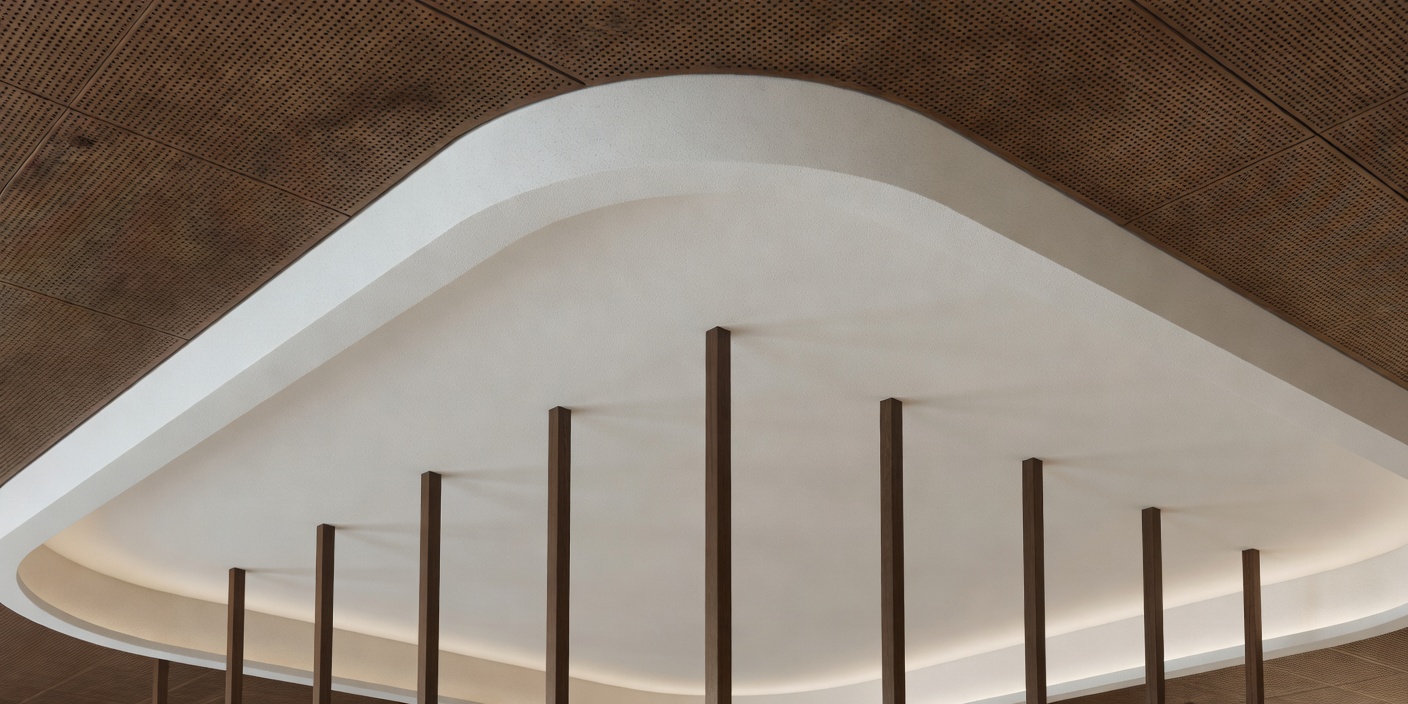
- Micro-perforated natural timber veneers with mineral fleece backing.
- Upholstered banquette bases built with open cell foam cores.
- Acoustic felt lining mounted flush underneath timber table tops.
The 3:1 Balance of Hard and Soft Surfaces
A restaurant must never be soundproofed into an eerie silence; guests desire the buzz and vitality of other people enjoying themselves. The secret is maintaining a balance where high-frequency clatter (cutlery strikes, ice shaking, glassware) is swallowed, while lower vocal warmth remains alive.