Photometry & Mood

Shape the Evening Mood

Guests do not evaluate a restaurant's lux levels intellectually; they feel them physiologically. Harsh glare triggers subconscious fatigue, while muddy, flat shadow makes food appear grey and unappetizing.

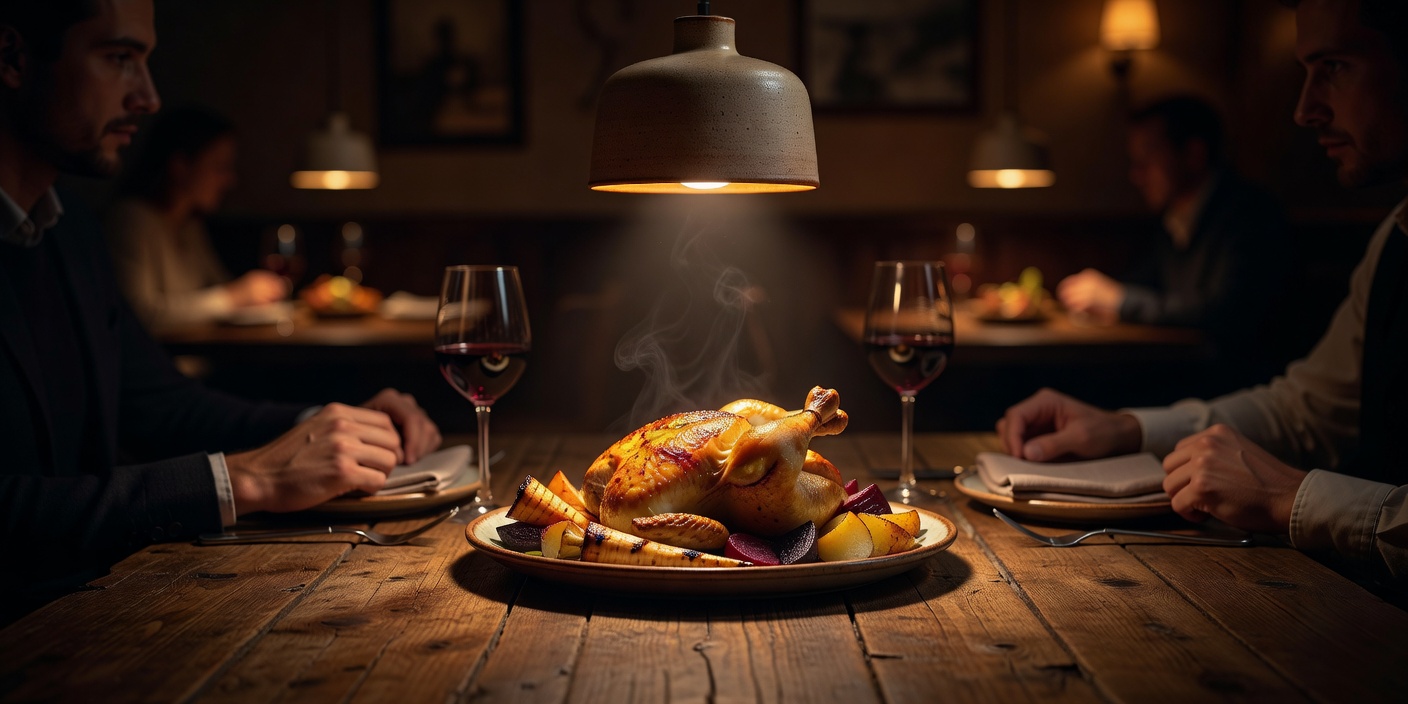
Dining table illuminated by low-hung warm ceramic pendant with narrow beam angle highlighting roasted dish

The Three Essential Layers of Dining Illumination

Successful dining rooms treat lighting not as a single ceiling switch, but as three harmonious light systems acting simultaneously: Table Top Task, Vertical Wall Wash, and Human-Scale Decorative Glow.

Layer 1

Table-Plane Accent

Light focused directly down on table surfaces (100–150 lux) with tight beam spreads (24°–36°). The beam illuminates the culinary dishes, wine stemware, and menu while leaving guest eyes nestled in soft flattering shadow.

Layer 2

Perimeter Wall Grazing

Lighting vertical wall surfaces expands the perceived room volume. Grazing textured lime plaster, raw brick, or ribbed timber surfaces adds rich tactile warmth without adding overall room glare.

Layer 3

Eye-Level Warm Points

Table lamps, small wall sconces, or brass shaded candle votives placed at 1100–1400 mm from finished floor. These fixtures illuminate faces gently, highlighting cheekbones and eye contact.

Kelvin Temperature & Color Rendering (CRI)

In culinary environments, the Color Rendering Index (CRI) is non-negotiable. Standard commercial LEDs often render below Ra 80, draining reds and oranges out of prime steaks, tomatoes, and red wines, leaving them looking dull brown.

Time Period / Scene Target Kelvin Recommended Dim Level Sensory Character
Lunch & Day Prep 2700 K – 3000 K 80% – 100% Clean, brisk, natural daytime energy; matches skylights.
Early Evening / Aperitivo 2400 K 60% Warm welcoming transition; softens business attire.
Prime Dinner Service 2200 K – 2400 K 35% – 45% Intimate, golden honey tones; enhances wine glasses.
Late Night / Digestif 2000 K – 2200 K 20% – 25% Candle-adjacent glow; perimeter wash subdued; slow pace.
Avoid The Pitfall

The Danger of Fixed Ceiling Downlights

Standard commercial downlights set directly above chair positions cast harsh vertical nose and eye-socket shadows—commonly known in theater design as "ghoul lighting." Always aim directional fixtures at the centre of the table top, never directly over seated human heads.